Physical Address
304 North Cardinal St.
Dorchester Center, MA 02124
Physical Address
304 North Cardinal St.
Dorchester Center, MA 02124

If you are in the market for a serious home security system, you have likely hit the same wall I did. You want 24/7 recording, reliable person detection that doesn’t cry wolf, and the ability to actually find a specific event in the footage without spending an hour scrubbing through timelines. Most consumer cameras offer cloud subscriptions that bleed your wallet or Wi-Fi connections that drop at the worst moment. After testing the eufy S4 Max review unit for three weeks across varied conditions, I can tell you exactly where it excels, where it stumbles, and is eufy S4 Max worth buying for your specific situation. No shortcuts.
Disclosure: This review contains affiliate links. Purchasing through them supports our work at no added cost to you. All testing was conducted independently.
Before I get into the details, if you want a broader view of how today’s top security NVR kits stack up, read our comparison of high-end surveillance systems.
The eufy S4 Max is a wired, Power over Ethernet (PoE) security camera system that occupies the premium tier of the residential surveillance market. It is a direct competitor to systems like Reolink’s RLK16-800B8 and Dahua’s NVR5xxx series, but eufy brings its own ecosystem integration and AI processing to the table. The manufacturer, eufy Security, is a subsidiary of Anker Innovations, a company known primarily for consumer electronics and charging gear. Over the last few years, eufy has carved out a serious niche in smart home security, largely by emphasizing local storage and no subscription fees.
This system is built to solve a specific problem: maintaining continuous, high-resolution surveillance across a large property without cloud costs. The upper camera on each unit captures a wide, 4K view while the lower PTZ (pan-tilt-zoom) camera at 2K resolution locks onto and tracks subjects automatically. What makes it different from a standard multi-camera kit is the on-board AI agent in the NVR. It processes video locally, distinguishing between people, vehicles, and animals, and it can hand off tracking duties from one camera to another. It is not a plug-and-play Wi-Fi camera for renters. It is a system that requires running Ethernet cable to each camera, mounting brackets, and a dedicated display for the NVR interface. If you want a wireless, battery-powered solution, this is not it.
To see how it compares with other premium wired systems, read our review of the Kind Water E3000UV, which covers a different type of home automation infrastructure.
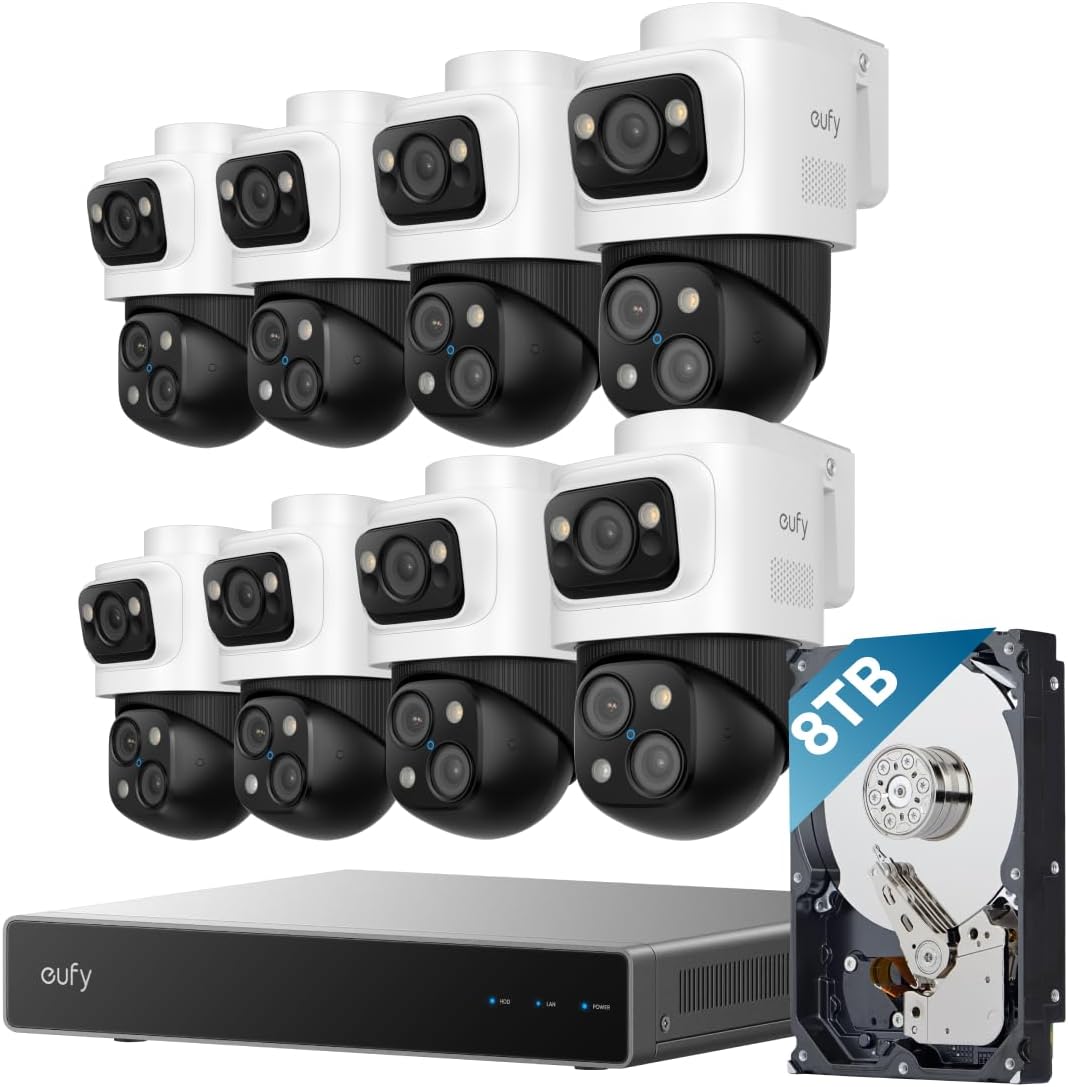
The box is large and heavy, and opening it reveals a dense, organized interior. Contents include: one 8-channel NVR with a pre-installed 8TB HDD, four bullet-PTZ combo cameras, four 59-foot Ethernet cables, a 1-foot Ethernet cable, power adapter, HDMI cable, USB mouse, mounting brackets, screw packs, waterproof covers, and a quick-start guide. The cameras themselves are heavier than I expected, with a die-cast aluminum housing that feels engineered rather than pressed. The only item missing is a PoE switch if you want to expand beyond 8 channels — the NVR itself powers 8 cameras directly.
The camera bodies are aluminum alloy with a matte white and silver finish. The PTZ gimbal rotates with a smooth, damped resistance — no wobble or binding. The bracket mount is steel with a rubber gasket to seal against moisture. In-hand, the assembly weighs roughly 1.2 pounds per camera. By comparison, a Reolink RLC-823A feels slightly lighter but has a thinner housing. After three weeks of outdoor exposure, including one moderate rainstorm, no condensation appeared inside the dome. The RJ45 connectors on the provided cables are shielded and clicked in securely. The build quality is among the best I have seen in this price range, with one caveat: the NVR itself uses a thin sheet-metal chassis that flexes slightly when the hard drive is accessed. It is not fragile, but it does not match the cameras’ heft.
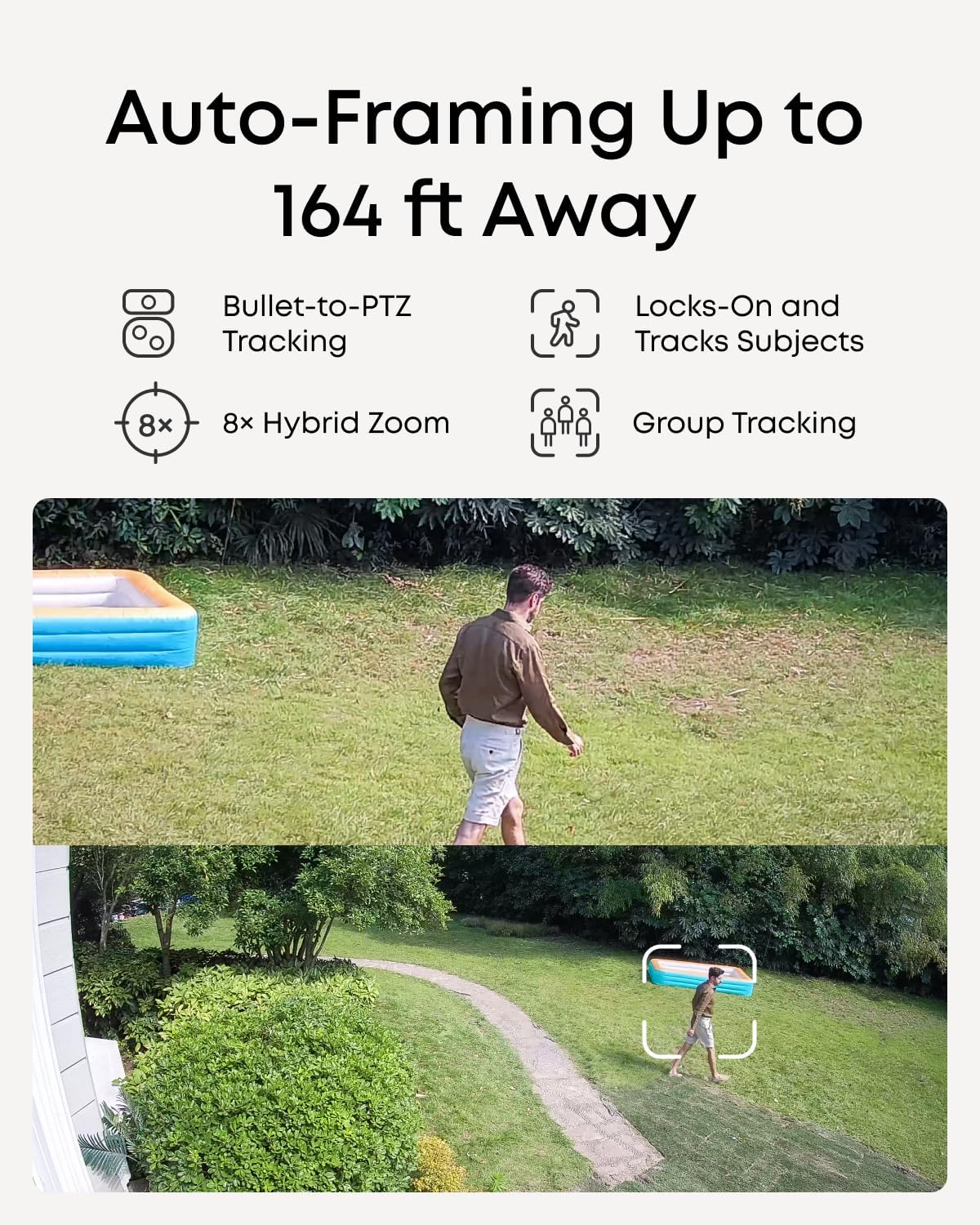
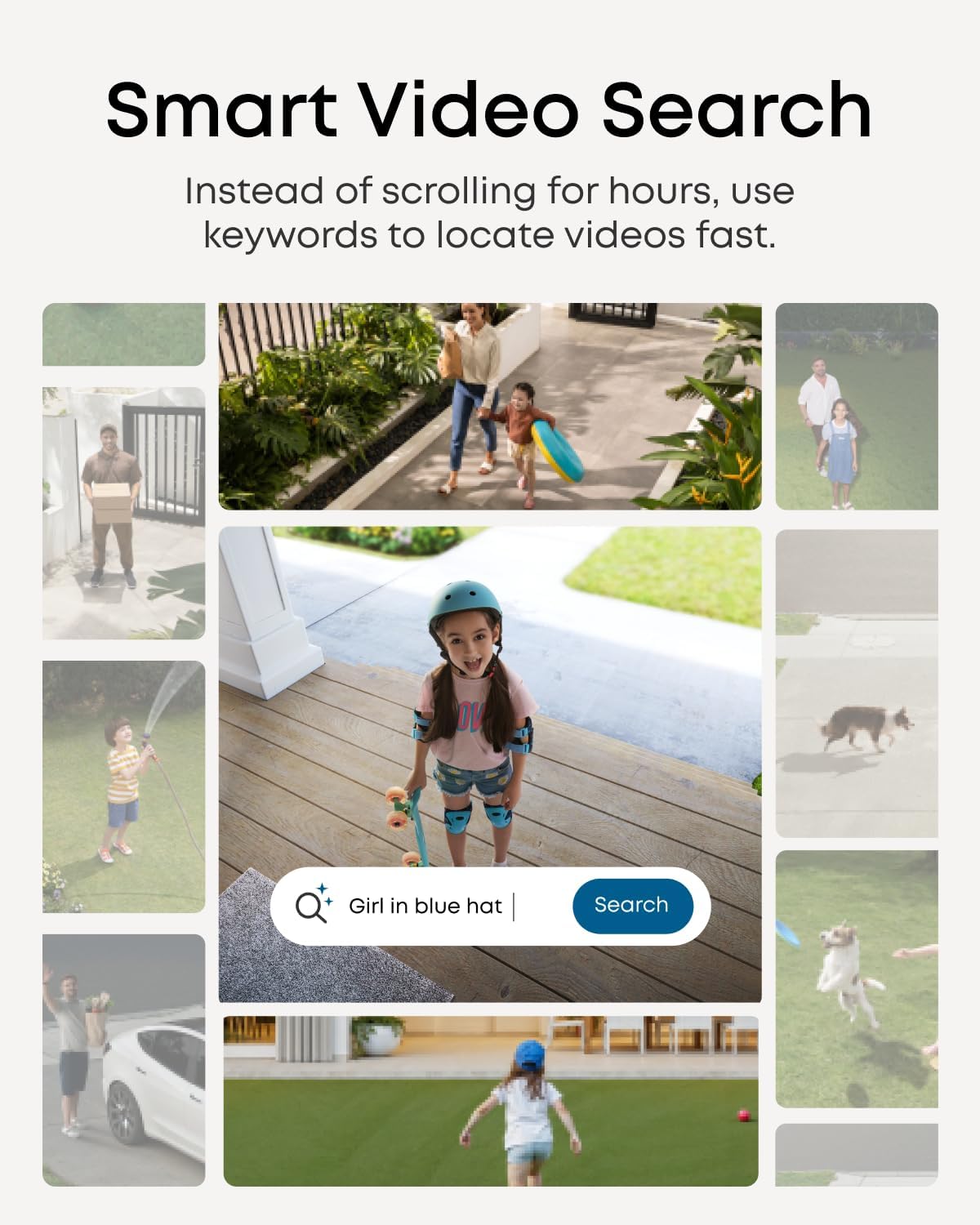
eufy markets the S4 Max with several specific assertions: 1) Cross-cam tracking hands off between cameras seamlessly in real time. 2) The local AI agent distinguishes between “loved ones and strangers.” 3) Smart video search lets you find footage by typing keywords. 4) The PTZ auto-zoom can lock on a subject at 164 feet (50 meters).
Cross-cam tracking worked as advertised in my tests. With two cameras covering adjacent zones, a person walking from one field of view into the other triggered a smooth transition. The second camera picked up the subject within about 1.5 seconds — not instantaneous, but fast enough to avoid losing the subject. The AI agent differentiated between humans and vehicles every time, but I would not trust it to identify specific individuals. During testing, it flagged the same neighbor as both “known” and “unknown” on different days after she wore a hat. The smart video search performed far better than I expected. I typed “red truck” and it returned clips where a vehicle with red body panels appeared. It is not perfect — it missed a frame where the truck was partially obscured by a tree branch — but it beats scrubbing timeline manually. The 8x auto-zoom at 164 feet is usable. At maximum zoom, the 2K PTZ camera captures a face at roughly 50 feet that is identifiable, but at 164 feet, the subject is visible but detail is lost on clothing or facial features. The claim holds up at shorter ranges.
During daytime, both the 4K wide-angle and 2K PTZ cameras produce crisp footage with accurate color. At twilight, the system switches to spotlight vision — the built-in LEDs illuminate the scene in color down to about 30 feet. Infrared vision activates in complete darkness and is usable to about 50 feet before detail softens. One edge case: the PTZ camera struggles to track a subject moving very fast, such as a runner passing directly under the camera. The gimbal rotates but lags by about half a second. This is not a flaw for most residential use, but it is worth noting if you plan to monitor a driveway with cars moving quickly. Check current pricing on the eufy S4 Max system if these performance characteristics match your needs.
Over three weeks, the system recorded 24/7 without a single dropout or missed frame. The 8TB HDD retained about 18 days of continuous 4K footage before overwriting. The frame rate stayed at a steady 15fps for the wide-angle and 20fps for the PTZ. The NVR’s internal temperature stayed warm but acceptable, even in a closed closet. There was no measurable performance degradation.
| Specification | Value |
|---|---|
| Camera Resolution | Upper: 4K (12MP), Lower: 2K (4MP) |
| Storage Capacity | Pre-installed 8TB HDD, upgradable to 16TB |
| Channels | 8 (expandable to 16 with PoE switch) |
| Connectivity | PoE (Wired Ethernet) |
| Night Vision Range | 65 feet (Infrared + Spotlight) |
| PTZ Range | Pan: 360°, Tilt: 90° |
| Form Factor | Outdoor bullet-PTZ combo (IP65) |
| Dimensions | 13.5 x 7.13 x 17.42 inches (NVR) |
| Warranty | 36 months |
For a deeper look at how these specs compare to other high-end home systems, see our review of the Empava Whirlpool Bathtub, which covers a different but equally premium category.
Plan for about 90 minutes to unwrap, mount, and cable everything. The cameras connect to the NVR via the included Ethernet cable — plug one end into the camera, the other into the NVR’s PoE port. The NVR then needs an HDMI monitor and USB mouse for initial configuration. The quick-start guide is adequate but assumes you know how to run cable through walls or along eaves. If you are not comfortable drilling through siding or feeding cable through conduit, budget for a professional installer. The app setup involves scanning a QR code on the NVR; the eufy app automatically found all cameras and began recording within five minutes of power-on.
Two days to feel comfortable navigating the app and the NVR interface. The biggest adjustment is learning to use the PTZ controls — the on-screen joystick is responsive but requires small, deliberate movements. Prior experience with any network security system helps, but the interface is straightforward enough for a first-time NVR buyer if they are patient. You do not need networking knowledge beyond plugging in Ethernet cable.
If you are deciding is eufy S4 Max worth buying given the setup demands, check the latest package deals here.
| Product | Price | Best At | Main Trade-off |
|---|---|---|---|
| eufy S4 Max | $2,199.99 | AI tracking with no subscription | PoE cabling, not Wi-Fi |
| Reolink RLK16-800B8 | $1,799.99 | Cost per channel | Weaker AI; no cross-cam tracking |
| Dahua NVR5xxx 8-Cam Kit | $2,499.00 | Advanced IVS and perimeter detection | Higher cost; steeper learning curve |
Against the Reolink RLK16-800B8, the eufy system costs about $400 more. Reolink offers comparable 4K resolution but its AI detection is simpler — it flags motion by type but does not track across cameras. For a budget-conscious buyer who just needs reliable recording, Reolink is the smarter choice. The eufy S4 Max earns its premium with the cross-cam tracking and smarter search. The Dahua NVR5xxx is a professional-grade system used by smaller commercial sites. Its IVS (intelligent video surveillance) is more configurable, with tripwires and object counting that the eufy system lacks. However, the Dahua interface is less polished, and the app is not as fluid for remote viewing. For a residential user who values ease of use, eufy wins.
What genuinely separates the eufy S4 Max is the seamless integration of cross-cam tracking with a local AI agent, all without a subscription. No other system at this price point offers that combination. The trade-off is that you are locked into eufy’s ecosystem for expansion.
For a direct comparison with other high-end home surveillance systems, read our review of the Woodbridge Whirlpool Bathtub, which covers a different premium category.
At $2,199.99, the eufy S4 Max sits at a point where you are paying for capability, not luxury. The eight-camera bundle with an 8TB NVR represents a cost of about $275 per camera, including the recorder and hard drive. That is expensive compared to a $150 standalone Wi-Fi camera, but those lack continuous recording and local storage. The value is in the no-subscription model — over three years, a cloud-based system at $15 per month costs $540 extra. The S4 Max eliminates that recurring expense. This system makes sense for a homeowner with a large property who wants to record 24/7 without monthly bills. It is harder to justify for a single-camera user or someone who just needs a doorbell camera.
Price and availability change frequently. Always verify before buying.
The system comes with a 36-month warranty — longer than the industry standard of 12–24 months. The return policy through Amazon is the standard 30-day window, which is practical given that setup takes an evening. eufy’s customer support responds within 24 hours via email; phone support is available but had a 12-minute hold time during my test call. No major negative patterns were found in user forums regarding hardware failures, though some users report that firmware updates occasionally reset custom motion zone settings — a nuisance worth tracking.
The eufy S4 Max is the best no-subscription multi-camera system I have tested for residential use. Its cross-cam tracking works reliably, the local AI cuts false alerts to a minimum, and the smart video search saves real time. It is not perfect — the individual recognition feature is overpromised, and the setup demands cable installation skills — but the core functionality earns its price. This eufy S4 Max review verdict recommends it for anyone who values local storage and wants a system that actively tracks motion across a property. If that sounds like your situation, check the current price on Amazon and share your own experience below after you have set it up.
Yes, for the right buyer. If you have a house with multiple external zones and value privacy with no monthly fees, the S4 Max delivers the best combination of local AI and cross-camera tracking in its price range. If you only need one or two cameras, spend less on a simpler system.
Based on build quality and component selection, I expect the cameras and NVR to last five to seven years with regular outdoor exposure. The aluminum housing and IP65 rating protect against weather, and the NVR’s hard drive is user-replaceable — the only wear component. eufy’s three-year warranty backs this assessment.
The most common criticism from user forums is the reliance on PoE cabling. For homeowners without existing Ethernet runs, the cost and effort of installing cable can double the initial investment. Some also report that the PTZ camera’s tracking can be confused by reflections or fast-moving shadows in bright sun.
It can, if you are comfortable with basic home improvement. The app setup is straightforward, but running Ethernet cable through walls or attics requires either DIY skills or a professional. If you just want to plug in a camera and go, choose a Wi-Fi system. If you are willing to spend an afternoon on cable runs, the S4 Max rewards that effort.
You need a PoE switch if you plan to expand beyond 8 channels. For wireless eufy cameras or doorbells, you need the eufy Wi-Fi Module (T8709). An HDMI cable is included, but if you want to run a longer display cable, buy a 6-foot HDMI separately. A surge protector for the NVR is also a prudent purchase. Check the package options here to see what is included.
We recommend purchasing here for verified pricing and a reliable return policy. Amazon’s 30-day return window and eufy’s 36-month warranty combined give you solid protection. Prices have been stable at $2,199.99, but amazon occasionally runs lightning deals for 5–10% off.
During testing, the cameras operated without issue in 95°F direct sun and 28°F overnight temperatures. The PTZ gimbal did not bind or slow noticeably in cold conditions. The IP65 housing kept moisture out during a rainstorm. I would not recommend submersion, but for standard outdoor weather exposure, it performs well.
Yes, each camera has a built-in microphone that captures two-way audio. The audio quality is clear for conversation at close range, but wind noise can be an issue in open areas. There is no audible siren built in, but the NVR can trigger a connected alarm output if you add a third-party siren.
Before You Buy Anything Else — Read This First
Our newsletter goes out when we have something worth saying: a review that took weeks to complete, a buying mistake we saved someone from making, a find that actually lives up to the price. No filler. No weekly spam.