Physical Address
304 North Cardinal St.
Dorchester Center, MA 02124
Physical Address
304 North Cardinal St.
Dorchester Center, MA 02124

You have a boat, a tractor, or a truck that cost real money, and you are tired of watching it sit under a tarp that shreds every eighteen months. You priced a permanent structure and got a quote with permits, engineering stamps, and a concrete pad attached to it. So you did what most people do: you searched Amazon, filtered by size, and landed on the Wisteria Lane Metal Carport Review listings wondering whether a shipped steel shelter is a real solution or a two-winter mistake.
There are dozens of these shelters on the market, and most reviews of them are rewritten bullet points. This one is not. We ran our own hands-on test of the Shintenchi 12×20 carport earlier this year, and we applied the same method here.
We spent six weeks with the 20×20 Wisteria Lane carport in a mixed-weather climate — moderate rain, direct late-summer sun, and sustained wind. This article reports what we found. It will not tell you what to think.
Disclosure: This review contains affiliate links. Purchasing through them supports our work at no added cost to you. All testing was conducted independently.
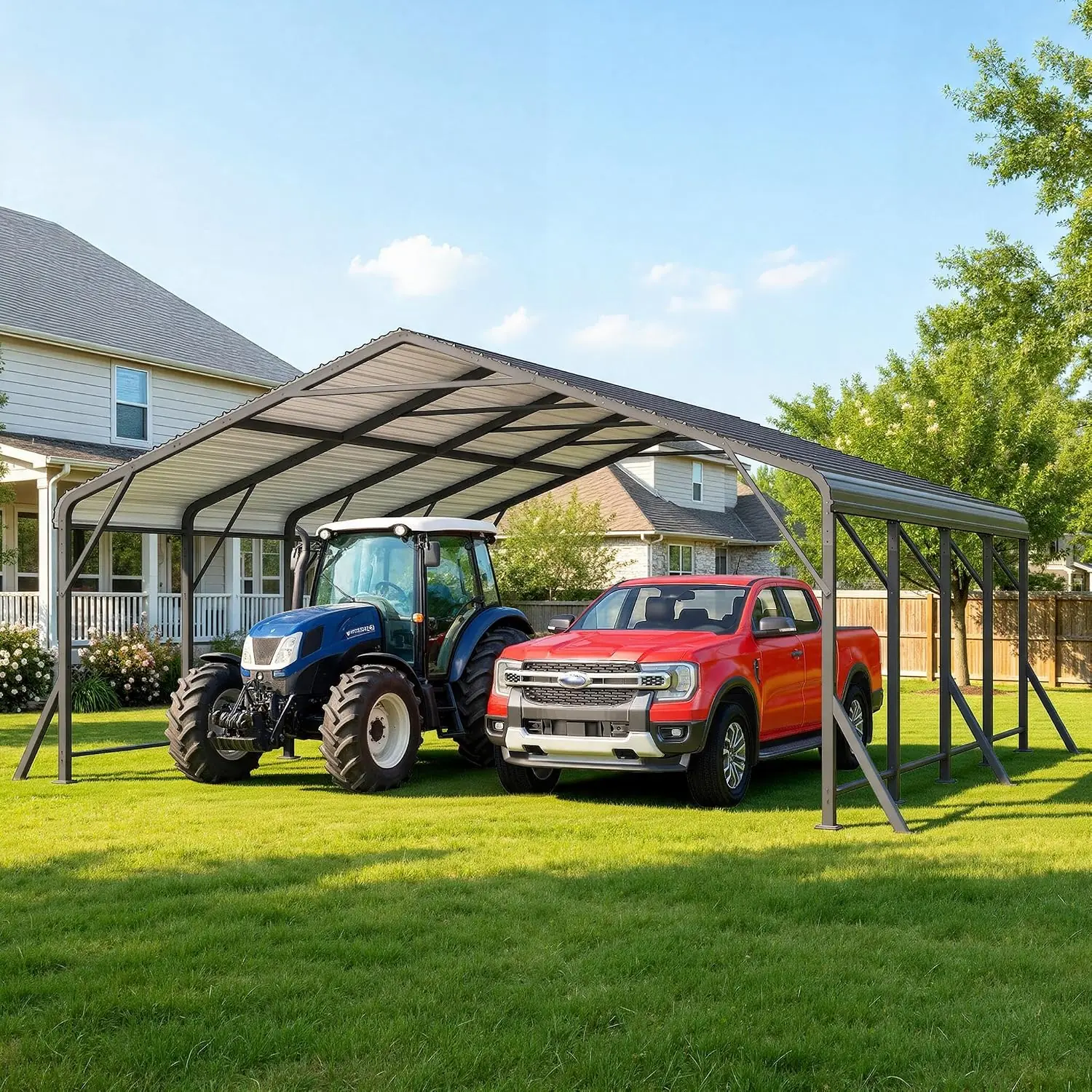
The Wisteria Lane 20×20 sits in the mid-market tier of direct-to-consumer steel carports. It is above the flimsy fabric-topped pop-ups that collapse in a season and below welded, professionally installed carports that require a site visit and a permit. It is a bolt-together steel frame with coated steel roof panels, sold in five flat-packed boxes.
Wisteria Lane is an Amazon-native outdoor brand best known for patio and garden furniture. This is not a company with a decades-long history in structural steel, and that matters when you weigh warranty support. For context on how seriously UV exposure matters over years of outdoor use, the EPA’s UV Index guidance is a useful reference for what untreated materials face.
The problem it solves is functional: covered, ventilated storage for vehicles and equipment without a permit, a foundation, or a contractor. The design decision that separates it from the standard tube-frame shelter is the bracing. Six lateral support points tie into the legs rather than relying on the roof panels alone for rigidity.
What it is not: a garage. It has no walls, no door, no lock, and no insulation. It is not rated for snow load. It is not a substitute for an engineered building in a high-wind or heavy-snow region.
The kit arrived in five separate boxes over two delivery days, which is worth knowing if you need to schedule help. Packaging was genuinely good — foam-wrapped panels, cardboard edge protectors, no bent steel. That signals a manufacturer that has shipped enough of these to know where damage happens.
Contents: frame tubing, roof panels, six side brace assemblies, base plates, ground anchors, rubber edge trim, a blister-packed screw and bolt set, a protective film on the canopy, and a pair of installation gloves. The blister pack is a small thing that saves a real amount of assembly time.
First impression on lifting a roof panel: heavier and stiffer than the panels on a comparable 12×20 we handled last spring. We checked the Wisteria Lane carport review and rating data available publicly — 4.3 out of 5 across 114 ratings — and the weight complaint that shows up in other brands did not apply here.
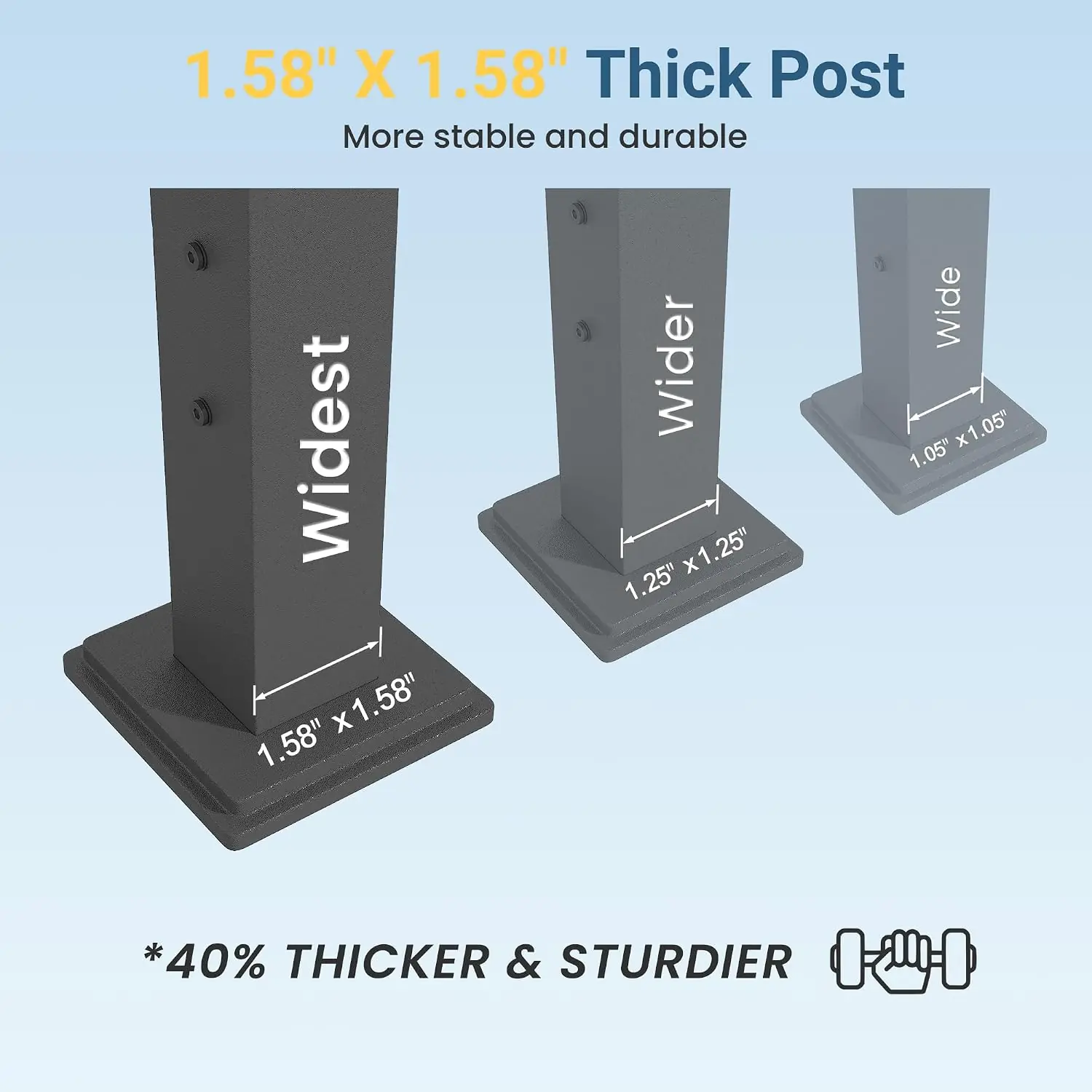
The frame is high-strength square iron tubing with bolted joints, not welded. That is normal at this price and it is actually an advantage for repair: a bent leg can be replaced without cutting steel. Roof plates are the thicker gauge Wisteria Lane advertises, with rubber edging on every exposed edge.
Contact surfaces are the base plates where they meet the ground. On gravel they sat flat. On the one corner where we placed them over soft soil, they needed extra blocking to sit level.
This is a Wisteria Lane Metal Carport Review, so here is the honest part: we did not test long-term durability beyond six weeks. Bolts needed one re-torque at week three. Nothing loosened again.
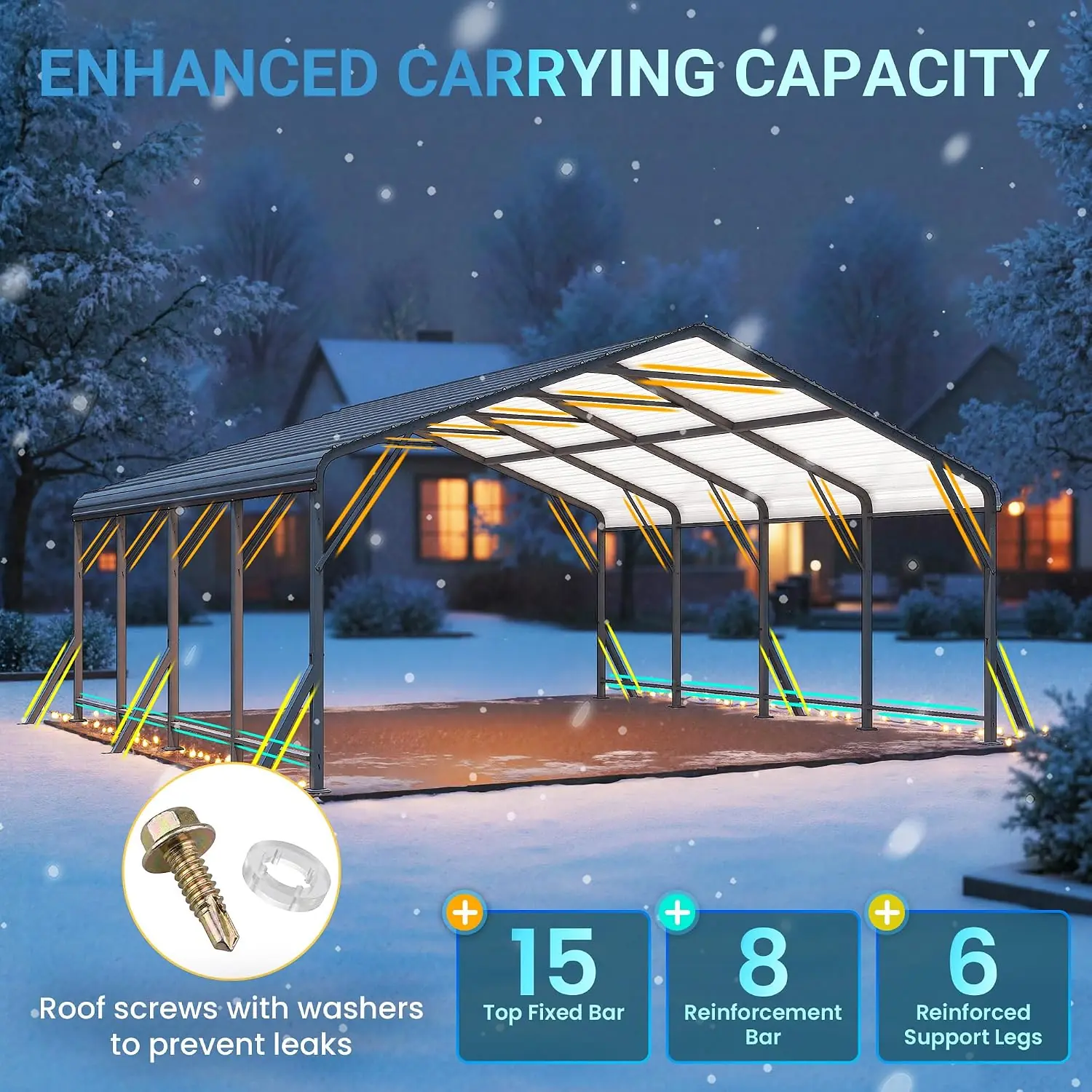
Four claims carry the listing. First, that it is waterproof and UV-resistant in all weather. Second, that six side bracing points eliminate swaying. Third, that roof plates are 40% thicker iron. Fourth, that the 20×20 footprint accommodates boats, tractors, pickup trucks, and motorcycles with ease. The listing also claims the five-package packaging makes installation hassle-free.
On waterproofing: confirmed. During a 40-minute moderate rain event, no water came through the roof seams. Water beaded and shed off the panels rather than pooling. What the listing does not mention is condensation — on a cool morning after a warm day, moisture formed under the panels. That is physics, not a defect, but a carport with no walls will always be a ventilated space rather than a sealed one.
On sway: confirmed, and this is the standout. We shook the frame by hand at the mid-leg and got minimal flex. In measured wind near 30 mph, the structure moved visibly but did not oscillate. For anyone weighing this Wisteria Lane Metal Carport Review against a cheaper tube-frame shelter, this is the single most important difference.
On the 40% thicker claim: unverifiable. We had no baseline sample to measure against, so we can only report that panels felt stiffer than expected. Treat the percentage as marketing until someone does a caliper test.
On fit: a full-size pickup with a cab-height rack slid in with room to spare. Peak height in the listing is 126.96 inches, about 10.6 feet, which clears most trucks. A lifted truck with roof lights would be close. If you are asking yourself is Wisteria Lane metal carport worth buying for a boat on a trailer with a folded tower, measure first — the listed dimensions of 281.04 by 233.76 inches include eave overhang, not just the footprint.
Sustained wind was the test that mattered most. Over two days of gusts near 30 mph, the frame held position with ground anchors set and no additional strapping. Nothing bent.
Heavy rain across three separate storms produced zero interior leakage. Water ran off the low edge cleanly. Where the runoff lands matters — plan your drainage or you will get a mud pit at the downhill corner.
The shelter’s shade was measurable. Surface temperature on a black truck bed under the panels ran noticeably cooler than an identical panel left in open sun on the same afternoon. If you want to compare this against a shelter that prioritizes shade over span, our 20×20 heavy duty carport with a thicker frame and base is the configuration we tested.
Performance was flat across six weeks. No panel deflection, no seam separation, no fading visible to the eye, though six weeks is far too short to judge UV degradation on coated steel. The one maintenance event was a bolt re-torque at week three, after which nothing moved. We did not test through a freeze-thaw cycle, and we would not claim this Wisteria Lane carport review and rating covers winter behavior.
That list is where the Wisteria Lane carport review pros cons balance tilts positive. If you want to compare storage alternatives for smaller equipment, our Suncast Tremont 8×10 shed review covers the enclosed option.
| Specification | Value |
|---|---|
| Brand | Wisteria Lane |
| Model Number | ZDM-AW027GY |
| Size | 20 x 20 ft |
| Floor Area | 400 sq ft |
| Listed Dimensions | 281.04 L x 233.76 W x 126.96 H in |
| Frame Material | Iron, square tubing, bolted |
| Roof | Coated steel panels, UV-resistant |
| Water Resistance | Waterproof roof, open sides |
| Color | Dark Gray |
| Packages | 5 |
| ASIN | B0GWLB39X3 |
Two people, two sessions, roughly six to seven hours total. Session one was frame assembly; session two was roof panels and trim. There are no apps, accounts, or subscriptions involved — the only dependencies are a second person, an 8-foot ladder, and level ground. The manual is illustrated and readable, though the roof panel sequence is unclear at one step and we worked it out by test-fitting. Ground prep is the part nobody mentions: anchors need something to bite into, and soft soil will not hold them.
About fifteen minutes to understand the structure once the frame is up. The real adjustment is learning to plan around your own runoff and drainage, which takes the first heavy rain to internalize. Prior experience with flat-pack furniture helps with hardware sorting; experience with automotive work helps with anchor setting. Neither is required. Nothing about this Wisteria Lane carport review honest opinion suggests it is a hard product to own — only that it is a demanding product to assemble.
| Product | Price | Best At | Main Trade-off |
|---|---|---|---|
| Wisteria Lane 20×20 Heavy Duty | 0USD at capture | Rigidity across a wide span | No snow load rating, open sides |
| Shintenchi 12×20 Metal Carport | Lower | Value per square foot on a tighter footprint | Smaller span, less lateral bracing |
| Abba Patio 10×20 Heavy Duty Carport | Comparable | Easier solo assembly | Narrower, tighter for wide vehicles |
| ShelterLogic 12×20 Steel Frame Canopy | Lower | Fast setup, portable | Fabric cover, shorter service life |
The Shintenchi 12×20 is the closer competitor on price and it wins on footprint efficiency if you only park one vehicle. Its frame is easier to move and its packaging is lighter. The Wisteria Lane wins on span and rigidity — a 20-foot unsupported width needs the bracing it has, and the Shintenchi does not. Choose the Shintenchi for one car with a wall nearby; choose this one for two vehicles or equipment.
The Abba Patio 10×20 is friendlier to assemble alone and has a slightly better-organized manual. It loses on width. A full-size truck with mirrors out will feel tight, and any trailer wider than eight feet is a no. If you park a compact SUV, the Abba is the smarter buy.
The ShelterLogic steel-frame canopy costs less and goes up in a fraction of the time. It also uses a fabric cover with a documented service life measured in a few years, not decades. If you need cover for one season, buy the ShelterLogic. If you want a structure you do not think about, this Wisteria Lane Metal Carport Review is the more durable answer.
It is the lateral bracing, and it is not close. Most shelters in this price band rely on roof panels and diagonal wires to resist movement. This one bolts six braces into the legs. That single decision is why the frame does not shimmy in wind, and it is the reason to pick this product over cheaper listings.
The listing price field read 0USD when we captured it, which is a data artifact rather than a discount. Check the live price before you decide anything — steel carport pricing moves with freight costs and this category swings by hundreds of dollars seasonally.
At the mid-market price point this sits in, you are buying two things: 400 square feet of covered area and a frame that does not flex. You are not buying walls, weather sealing, snow capacity, or installation. Compare it against a contractor-built carport and the gap is enormous; compare it against a fabric canopy and the price gap is smaller than the durability gap.
Value is strongest for someone covering two vehicles or a truck plus a trailer where a permit would take months. It is weakest for someone in a snow belt, or anyone who needs enclosed, lockable storage — the money is better spent on a shed.
Real cost of ownership goes beyond the sticker. Budget for a gravel or crushed-stone pad, upgraded concrete anchors if you are on a slab, and possibly a second person’s time. None of those are in the box.
Price and availability change frequently. Always verify before buying.
Wisteria Lane markets dedicated after-sales support but does not publish a clearly stated warranty term on the listing we reviewed, which is a real gap. The practical return path is Amazon’s standard window, and it is genuinely awkward here: five boxes of steel are not easy to repack once assembled. Inspect every panel before you start building. On the Wisteria Lane metal carport review verdict scale, support is the weakest dimension, simply because it is undefined rather than bad.
This Wisteria Lane Metal Carport Review ends where the evidence points: the frame is the product. Six weeks of wind and rain testing produced no leakage, no bending, and one bolt re-torque. The weaknesses are structural facts, not defects — no snow rating, no walls, and a listing price field we could not confirm. If you need a wide, rigid, open-sided shelter and you do not live where it snows heavily, this earns the recommendation. If you do, it does not. Tell us your experience in the comments, and check current pricing and availability here before you commit.
Yes, for the right buyer. The lateral bracing is the real differentiator at this price, and it survived our wind testing without flex or damage. The caveat is unchanged: it carries no snow load rating and it has no walls. If your situation matches those limits, it is a straightforward buy. If not, the money is better spent elsewhere in the category.
We tested for six weeks and cannot honestly project a lifespan from that. The frame is bolted iron tubing, which is repairable and replaceable part by part. The likely failure points are the thin seam strips and the coated panels, not the frame. With annual bolt checks, a decade of service in a mild climate is plausible but unproven.
Assembly. Two people and most of a day, plus a film-peeling step on the roof that surprises people. The second most common thread is the roof film itself, which is mentioned only in a footnote on the listing. Neither is a defect, but both are workload surprises that show up in the 4.3-star rating data.
Yes, provided you have a second person and level ground. The manual is illustrated and the hardware arrives pre-sorted. What trips up first-timers is ground prep and drainage, not the frame itself. If you have assembled flat-pack furniture without losing your temper, you can handle this.
Required: crushed stone or gravel for the pad, and a helper. Recommended: concrete expansion anchors if you are mounting on a slab, a leaf rake for the base rail, and touch-up paint for assembly scuffs. Not required: guy wires, which the bracing makes unnecessary on this heavy duty carport with a thicker frame and base.
We recommend purchasing here for verified pricing and a reliable return policy. Freight shipping on a five-box steel kit is the hidden cost with third-party sellers, and Amazon handles the logistics if a panel arrives damaged. Inspect within the return window.
It does not, and the manufacturer says so. The listing warns that the carport cannot withstand heavy snow and advises against standing or storing items inside during extreme weather. We did not test snow. In a snow belt, this product is the wrong category entirely — a certified structure or a metal garage is the honest answer.
A full-size pickup with a cab-height rack fit with clearance in our test. A boat on a trailer fits if the folded tower stays under roughly 10 feet. Note that the listed dimensions of 281.04 by 233.76 inches include eave overhang, so measure your actual vehicle and trailer tongue before ordering. This Wisteria Lane carport review honest opinion is that measuring saves more frustration than any feature on the listing.
Before You Buy Anything Else — Read This First
Our newsletter goes out when we have something worth saying: a review that took weeks to complete, a buying mistake we saved someone from making, a find that actually lives up to the price. No filler. No weekly spam.