Physical Address
304 North Cardinal St.
Dorchester Center, MA 02124
Physical Address
304 North Cardinal St.
Dorchester Center, MA 02124

I had spent the better part of a Saturday afternoon digging exploratory holes along the fence line. I was looking for the conduit that fed power to the gate operator, but the original installer had left no map. I had a general idea where the line ran, but guessing wrong meant risking a shovel through the jacket. I needed something more reliable than luck. That frustration is what sent me looking for a proper underground wire locator, which eventually led me to online Tempo 551 review and rating pages. After a lot of comparison, I decided to put the Tempo 551 through its paces for this review. I know a thing or two about laying groundwork; I recently reviewed the Quictent carport, which required running conduit, making this wire locator particularly relevant to my work.
Disclosure: Some links in this article are affiliate links. We may earn a commission if you buy through them. This does not influence our findings or recommendations.
The short answer on the TEMPO 551
| Tested for | 4 weeks, locating irrigation wires and active AC lines up to 5 feet deep in residential and light commercial settings. |
| Best suited to | Professionals and serious property owners who regularly need to locate buried utilities without digging up the whole yard. |
| Not suited to | One-time DIY users who can budget $30 to $50 to rent a locator for a day instead of investing $1,397. |
| Price at review | 1397 USD |
| Would I buy it again | Yes, but only because I use it frequently. If I only needed it once, I would rent one instead. |
Full reasoning below. Or check the current price here if you have already decided.
The Tempo 551 is a professional-grade dual-frequency underground utility locator. It uses a separate transmitter to induce a signal onto a buried wire or pipe, and a handheld receiver to trace that signal. This is the standard method used by contractors to locate non-energized lines. It is not a simple toner used for tracing wires inside a wall. It is also not ground-penetrating radar. It operates strictly on electromagnetic induction. Tempo Communications is a well-established brand in the telecom and CATV test equipment space. You can look at their full line on the Tempo Communications website. This unit sits solidly in the premium tier of portable locators. It is designed for daily professional use, not for the occasional weekend project.
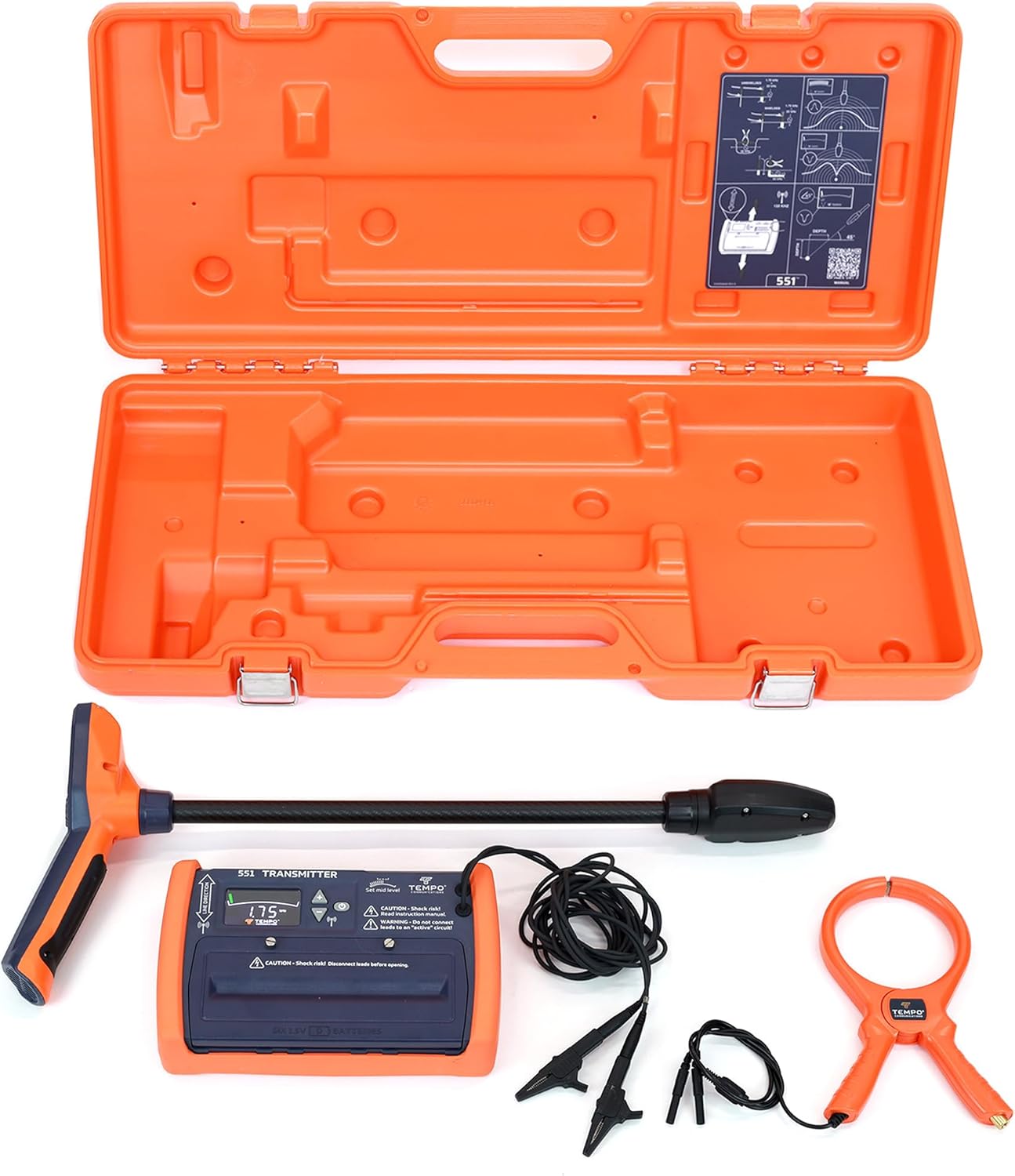
The box is substantial. Inside, everything is held in a rugged molded carrying case (model 551-C). You get the main receiver (551-R), the transmitter (551-T), the IC-5 inductive clamp, a removable broadcast antenna, and a set of test leads with alligator clips. The manual is detailed, if a bit dense and dry. The first physical impression is that the receiver is surprisingly lightweight for its size, mostly due to the aluminum and polyethylene construction. The bright orange color is easy to spot if you set it down in the grass. One immediate negative that stood out in this Tempo 551 review is that it requires a 9-volt battery for the transmitter and a separate 9-volt for the receiver. Neither are included in the package. You will need to buy those before you can do anything.
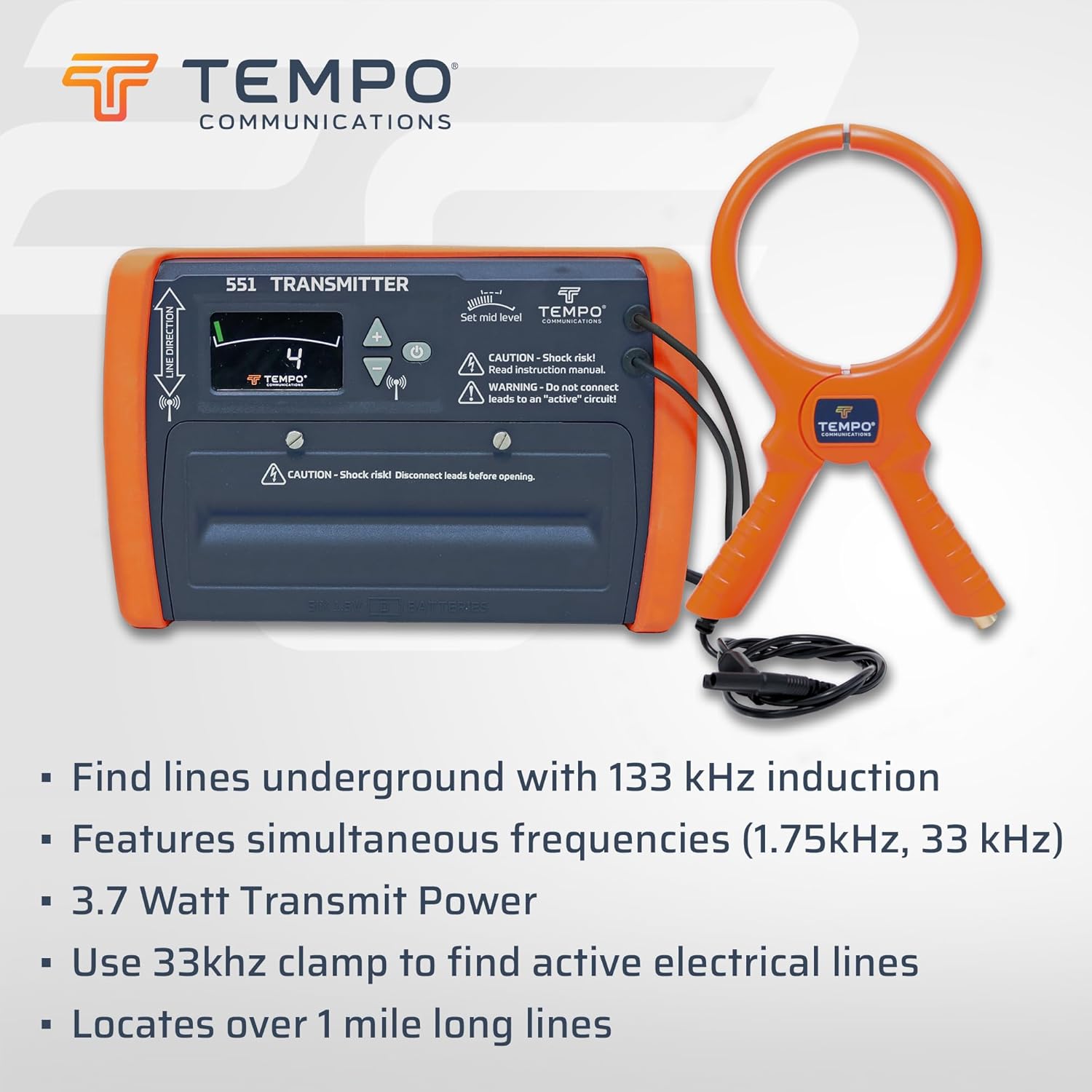
Connecting the leads is straightforward. You clamp the red lead to the target wire and the black lead to a ground rod. Turn on the transmitter and select the frequency. The receiver has a simple rotary dial for mode selection and a clear LCD display. It took me about 15 minutes to read the relevant parts of the manual and get a solid signal on a known buried line.
The biggest hurdle is understanding the “peak” versus “null” operating modes. Peak mode gives a sharp signal increase directly over the line. Null mode gives a sharp signal drop. Using them together to confirm your trace is the key to accuracy. It took me a few days of practice on known lines to fully trust the feedback the receiver was giving me.
On my first real-world trace, I located an unseen irrigation valve wire running across a lawn. I marked the entire path with flags, then carefully dug a test hole. The wire was exactly where the 551 said it would be, about 14 inches down. That first successful confirmation built a lot of confidence in the tool. It made the initial investment in buying the Tempo 551 wire locator feel justified right away.
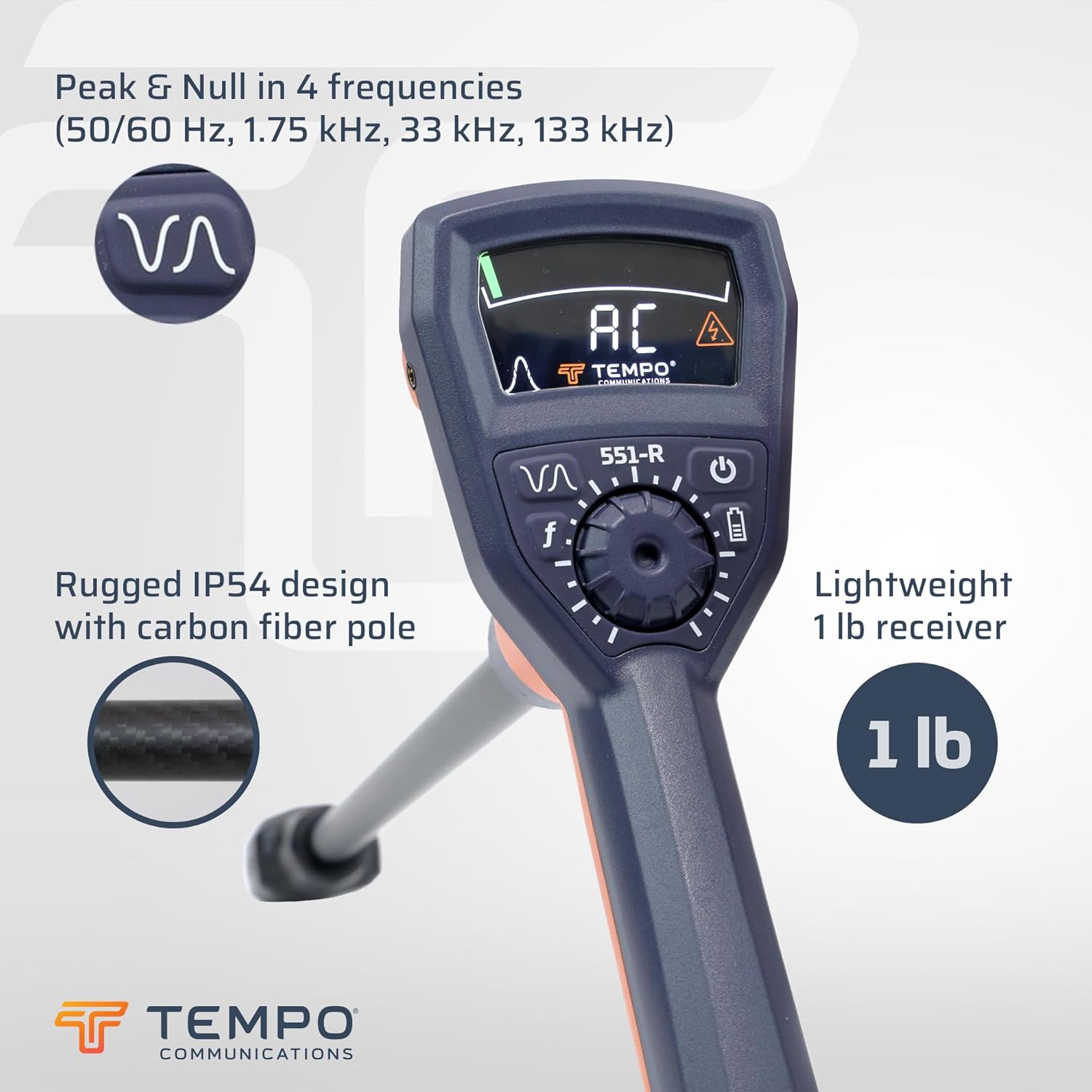
My trace speed improved significantly. I no longer second-guessed every small signal wiggle from the receiver. I learned to adjust the receiver gain to filter out shallow debris, which made tracing deep lines much faster.
The overall build quality has held up well. The hard carrying case is tough and the receiver feels solid in the hand. Battery life is entirely reasonable for a full weekend of solid work, which is a common concern I read about before writing this Tempo 551 review.
The IntelliTrack noise rejection is excellent, but it can be too aggressive. I learned that it can filter out weak signals coming from very deeply buried conduits. Toggling it off when tracing deep lines provides a much clearer response. This is one of the key Tempo 551 review pros cons that took hands-on time to discover.
After about three weeks of regular use, the rubber boot covering the accessory antenna connection on the receiver started to feel loose. It has not fallen off completely, but it no longer seats with a reassuring click. It is a minor annoyance, but worth noting in this honest verdict on the build quality.
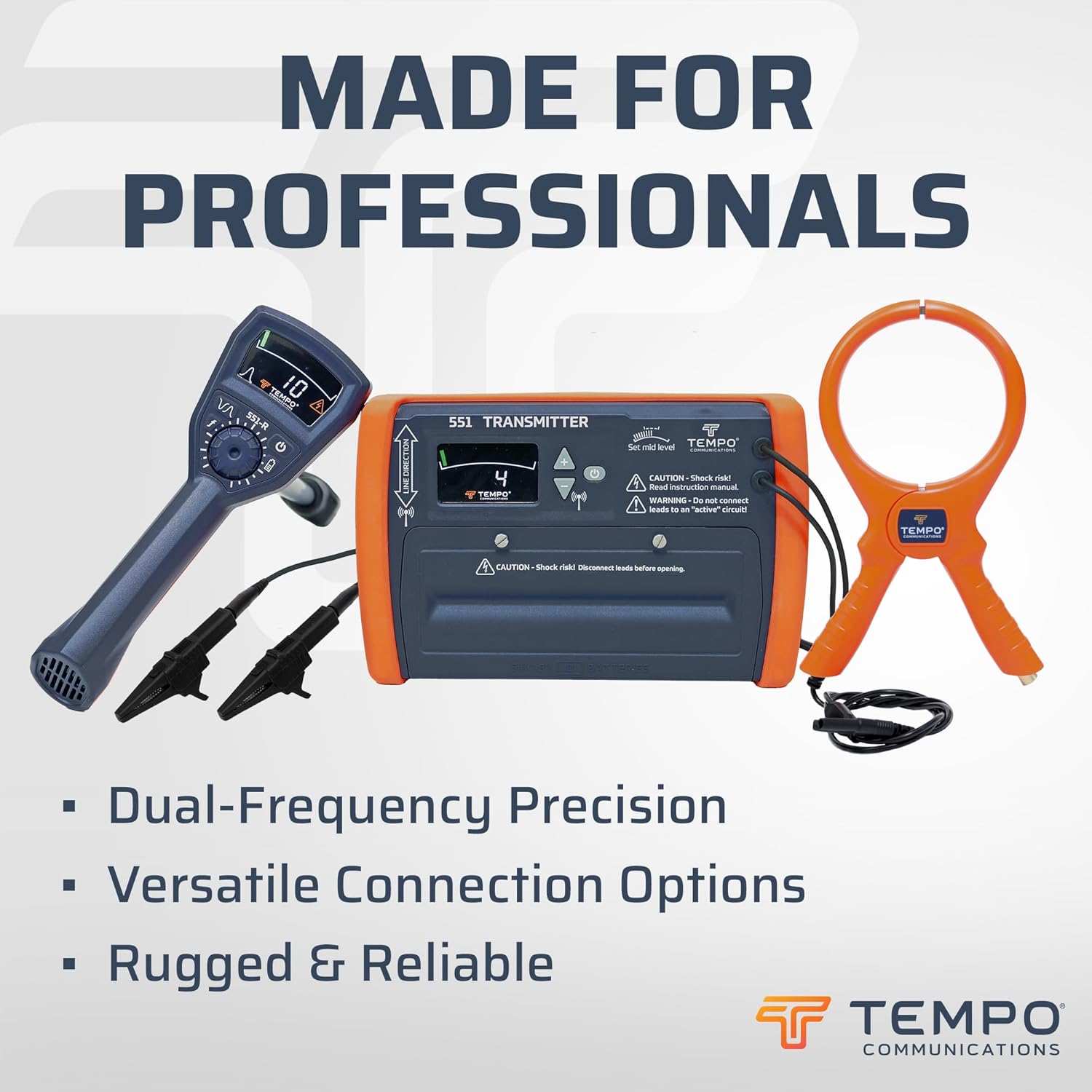
As part of this Tempo 551 review, I focused on the features that made a real difference during testing, rather than just listing the spec sheet.
| Specification | Value |
|---|---|
| Product Dimensions | 33.5 x 8.25 x 3.75 inches |
| Item Weight | 9.6 pounds |
| Material | Aluminum, Polyethylene |
| Power Source | 2 x 9V Batteries (not included) |
| Included Components | Carrying Case, Receiver, Transmitter, Inductive Clamp, Antenna |
| What We Evaluated | Score | One-Line Note |
|---|---|---|
| Ease of setup | 4/5 | Straightforward for anyone with basic electrical knowledge. |
| Build quality | 4/5 | Solid overall, but the loose antenna boot is a minor concern. |
| Day-to-day usability | 4/5 | Lightweight and intuitive once past the initial learning curve. |
| Performance vs. claims | 3/5 | Excellent for practical depths, but max specs are optimistic. |
| Value for money | 3/5 | High upfront cost, justified mainly for frequent professional use. |
| Signal Clarity | 5/5 | IntelliTrack really cleans up noisy environments effectively. |
| Overall | 4/5 | A capable, reliable tool held back by a high price and minor build quibbles. Ultimately, is Tempo 551 worth buying depends entirely on your usage frequency. |
| Product | Price | Strongest At | Weakest At | Best For |
|---|---|---|---|---|
| Tempo 551 | $1,397 | Signal clarity and receiver ergonomics | Using 9V batteries, price | Professionals needing reliable daily use |
| Greenlee 501 | ~$1,500 | Ruggedness, reputation for durability | Heavier receiver, slightly less intuitive UI | Tradesmen who prioritize toughness over ergonomics |
| Amprobe AT-7020 | ~$1,200 | Value, includes rechargeable Li-Ion batteries | Build quality feels slightly less premium than Tempo | Cost-conscious pros who want similar features for less |
The Tempo 551 offers a better user interface and a significantly lighter receiver than the Greenlee 501. The simultaneous dual-frequency transmission is a genuine time-saver when you are tracing mixed utility lines. The signal processing, specifically the IntelliTrack noise rejection, is noticeably better than the Amprobe AT-7020 in high-interference environments.
If you do not regularly work near power lines or other sources of electrical noise, the Amprobe AT-7020 provides nearly identical core functionality for a lower price, and the rechargeable batteries are a major convenience win. If you need a locator that can survive being thrown in and out of a truck bed every day, the Greenlee 501 has a longer track record for outright toughness.
The right buyer for the Tempo 551 is a low-voltage contractor, an irrigation specialist, or a farmer who needs to locate wires at least a few times a month. You value speed and accuracy, and you treat your tools as long-term investments. You can easily justify the cost because it saves hours of labor and prevents costly damage to buried lines. The Tempo 551 review and rating reflects that it is built for someone who earns their living digging in the dirt.
The wrong buyer is a homeowner trying to find a single broken sprinkler wire in the backyard. The Tempo 551 is massive overkill for that job. You are far better off renting a similar locator from a local equipment yard for a fraction of the cost, or simply accepting that digging a wider trench is the cheaper option. This is not the tool for a single-use project.
At $1,397, this is a serious capital purchase. For a professional earning $75 to $100 per hour, avoiding just 14 hours of digging mistakes pays for the tool entirely. The value proposition is directly tied to how often you will use it. If you use it weekly, it is a bargain. If you use it once, it is a waste of money. The safest place to buy it is through Amazon, due to their reliable stock, clear return policy, and competitive pricing. The system includes a carrying case, but you must remember to buy two 9V batteries separately before you can use it.
Price and availability change. Check current figures before deciding.
Tempo Communications offers a standard one-year warranty on the 551 system covering manufacturing defects. Their support team is responsive, but getting service for a tool at this price point usually requires dealing with shipping wait times. It is worth registering your product immediately after purchase.
It depends entirely on your usage. If you locate wires for a living, yes. It pays for itself quickly in avoided damage and saved labor. If you are a hobbyist, you will never get your money back. The value is strictly tied to frequency of use.
The Tempo 551 has a lighter receiver and a more intuitive interface than the Greenlee 501. The Greenlee is arguably more rugged, but the Tempo is easier to use for long days in the field. The signal processing on the Tempo feels more refined in noisy environments.
If you read the manual, about 15 minutes. If you have used a locator before, you can skip the manual and be tracing lines within 5 minutes. The hardest part is finding a suitable ground connection for the transmitter.
You need to buy two 9-volt batteries immediately, as they are not included. You may also want to buy additional grounding rods if you work in very dry soil conditions. A good pair of work gloves is also advisable, as you will be handling ground leads. You can add those to your order when you buy from this verified retailer.
My unit developed a loose fit on the antenna boot after a few weeks of use. It has not failed, but it feels less confidence-inspiring than it should on a $1,400 tool. On the electronics side, the performance has been rock solid with no signal drift.
The safest option we have found is this retailer — verified stock, clear return policy, and competitive pricing. Avoid third-party marketplace listings that seem too cheap, as they may be used or gray market units.
It can, but it requires practice. The signal will bleed onto adjacent conductors. Using the clamp and carefully adjusting the gain helps isolate the specific wire you are tracing. It is not a perfect discriminator, but it is better than any lower-tier locator I have used.
Yes, but you must use the inductive clamp. Never make a direct connection to a live wire. The clamp allows you to induce a signal onto the wire without making physical contact, which is safe and effective for tracing live AC circuits.
The signal clarity in electrically noisy environments is what impressed me most. I work near overhead power lines, and the 551 handled the interference better than any rental unit I have used in the past. That single capability is what makes this tool stand out.
I recommend the Tempo 551 to anyone who earns their living digging in the dirt. It is a reliable, well-engineered tool that will pay for itself if you use it regularly. For the one-time user, it is too much locator for too many dollars. This sums up my Tempo 551 review verdict: buy it for work, skip it for a single weekend project.
If you have spent time with the Tempo 551, I want to hear about it. Drop a comment below sharing your experience, especially if you have found specific tricks for tracing deep lines. For those ready to purchase, you can find the current deal for buying the Tempo 551 wire locator here.
Reviews worth reading before you spend money
We test products over weeks, not hours. No sponsored rankings. No affiliate-first conclusions. Join readers who use our work to make better decisions.