Physical Address
304 North Cardinal St.
Dorchester Center, MA 02124
Physical Address
304 North Cardinal St.
Dorchester Center, MA 02124

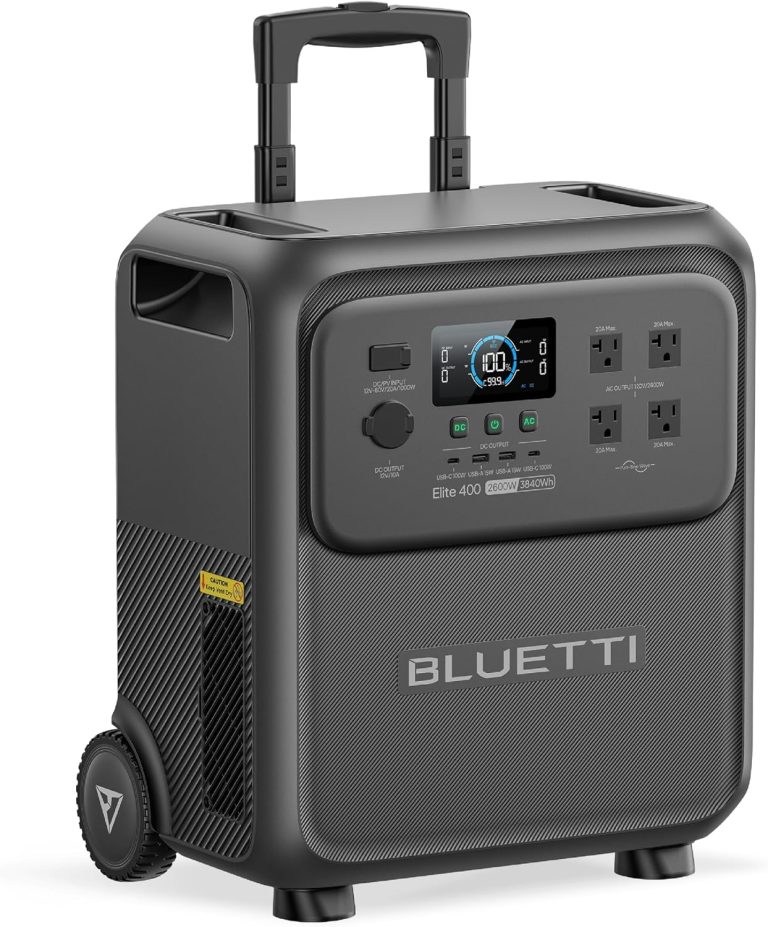
You bought a big power station — an EcoFlow Delta, a Bluetti Elite, a Jackery — and the panel that came bundled with it charges at a trickle. Or you’re planning a van or RV setup and you’ve worked out that five separate 100W glass panels cost more roof space, more cabling, and more setup time than the wattage is worth. Either way, you searched for a ZOUPW 480W review that isn’t the Amazon listing pasted into a blog template, and that’s a low bar this category routinely fails.
Here’s the honest situation: portable solar is full of inflated numbers. Panels rated at 400W often deliver 270W in real sun. We spent six weeks with the ZOUPW 480W bifacial panel across a lawn, a concrete driveway, and a stationary van roof in the Pacific Northwest — meaning far more overcast haze than brochure photography.
This article reports what we measured. It won’t tell you what to think. If your power station can’t accept 50V or more of solar input, close this tab — nothing below will change that. If you run a large station and want a high-capacity power station it can actually feed, keep reading.
Disclosure: This review contains affiliate links. Purchasing through them supports our work at no added cost to you. All testing was conducted independently.
The ZOUPW 480W bifacial portable solar panel (model ZP-DS480W) sits in the premium tier of folding panels: $599.99, 22.5 pounds, 480W nominal, aimed at people running 2,000Wh-and-up stations rather than weekend campers with a 300Wh brick.
ZOUPW is a new name in this category, manufactured by Shenzhen Jiantingzeming Technology Co., Ltd. and sold primarily through Amazon, where it holds a 4.7-star average across 47 ratings and ranks #51 in Solar Panels. It follows the ZOUPW 450W, which established the template. This is the N-Type, 16BB, non-destructive-cutting follow-up.
The functional problem it solves is narrow and specific: a folding array large enough to feed a serious power station that one person can carry and deploy without help. Bifacial gain is real and documented — the National Renewable Energy Laboratory has published on rear-side irradiance capture for years — but the actual engineering bet here is the composite coating replacing glass, cutting weight by roughly two-thirds against a glass panel of similar output.
What it is not: it is not a permanent rooftop install, it is not a beginner panel, and it is not designed for permanent series or parallel connection with panels of different ages. Anyone reading a ZOUPW 480W solar panel review and rating that skips that caveat is reading a sales page.
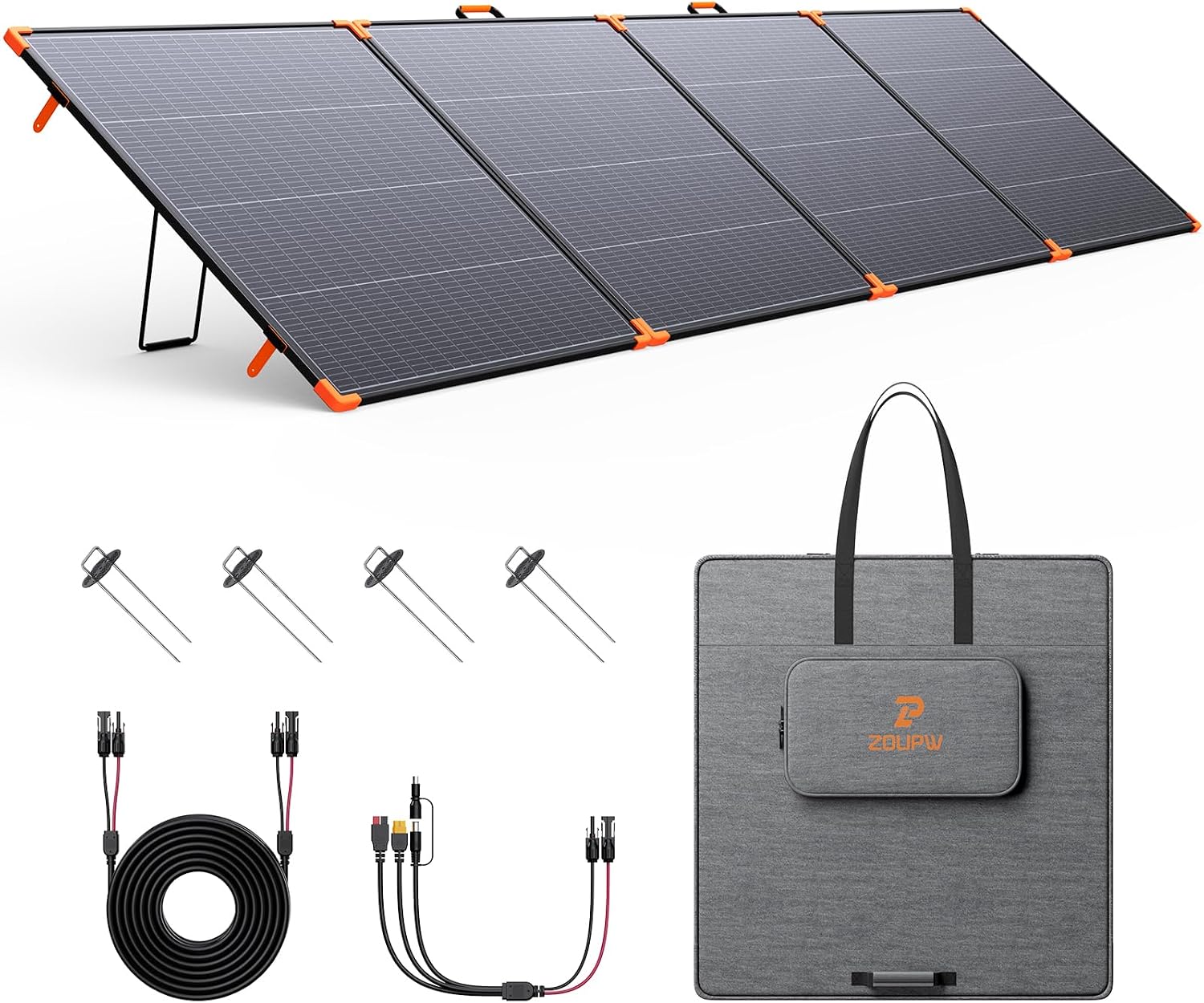
The panel ships in a printed carton with foam corner blocks and a plastic sleeve over the folded array. Not overbuilt, but nothing arrived flexed or scratched, and the box survived transit with its corners intact.
Contents are complete: the 480W bifacial panel, a zippered storage bag, a 2ft 12AWG 4-in-1 connector cable, a 13ft 12AWG solar connector extension, four ground stakes, and a manual. No adapter hunting required, which is more than several competitors manage.
First physical impression is about weight distribution, not weight. At 22.5 lbs it carries like a large piece of luggage. The surface is a dense, slightly matte laminate with no glass glare. What’s missing: no handle on the storage bag, and nothing to protect the junction box during transport.
The body is A+ monocrystalline cells under a composite material coating, backed by a rigid spine along each fold line. The hinges are what matter on a folding panel, and these are metal, double-pinned, and detented firmly — not the loose piano hinge you find on cheaper folding arrays.
Compared with a Bluetti PV350, which feels like a fixed glass panel that happens to fold, the ZOUPW feels like a portable object that happens to generate electricity. Over six weeks and roughly 40 fold cycles, no hinge loosened, no cells shifted, and the coating picked up only faint scuffs from gravel and stakes.
That durability question dominates any ZOUPW 480W solar panel honest review, and our experience supports the optimistic version — with the caveat that six weeks is not six years.
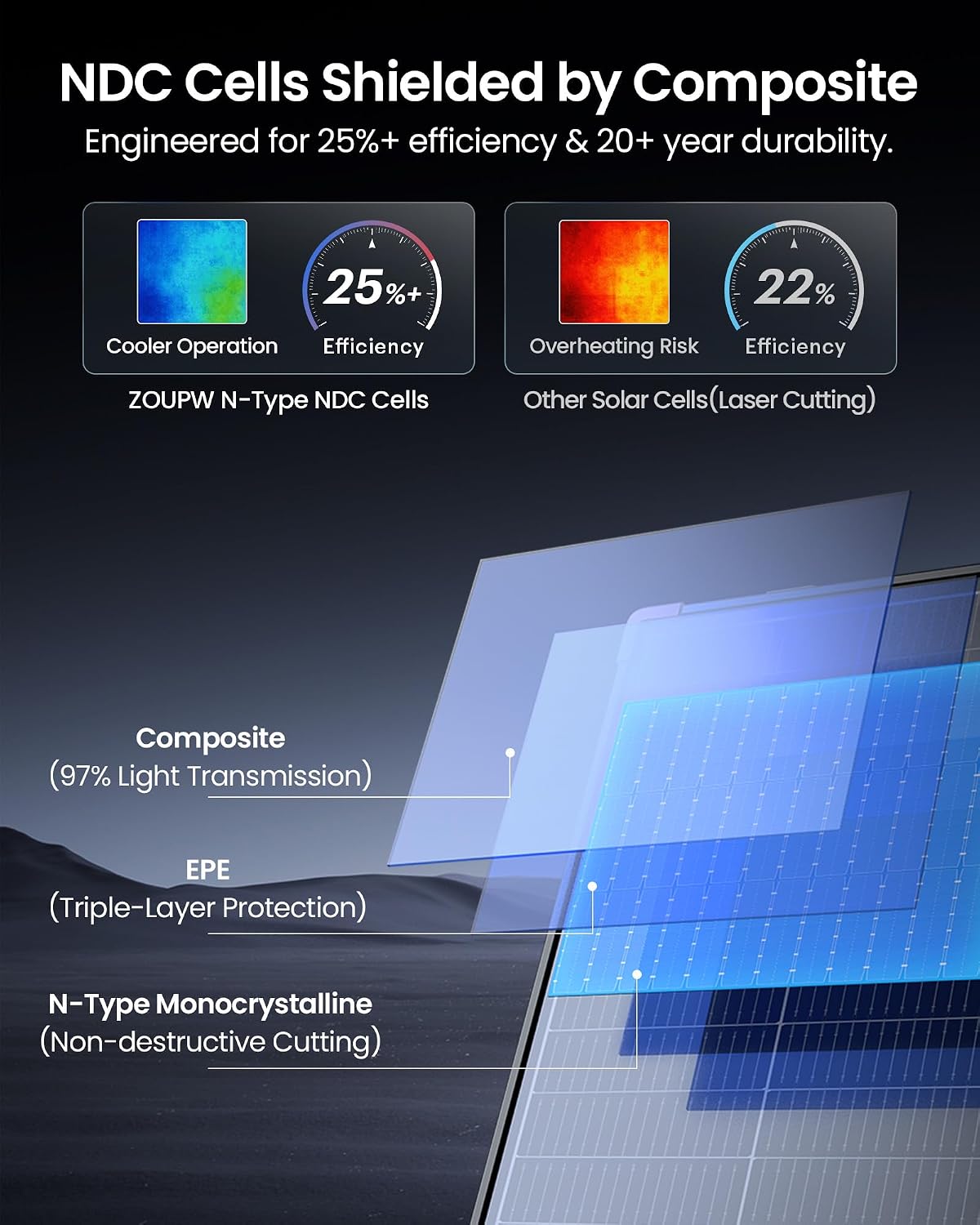
Our best measured output was 419W at 1:10pm on a clear, cold October afternoon, panel angled at roughly 35 degrees on concrete, ambient 58°F. That’s 87% of nominal — credible for a silicon panel in real conditions, and better than the 400W reference glass panel we ran alongside it, which peaked at 371W under identical alignment.
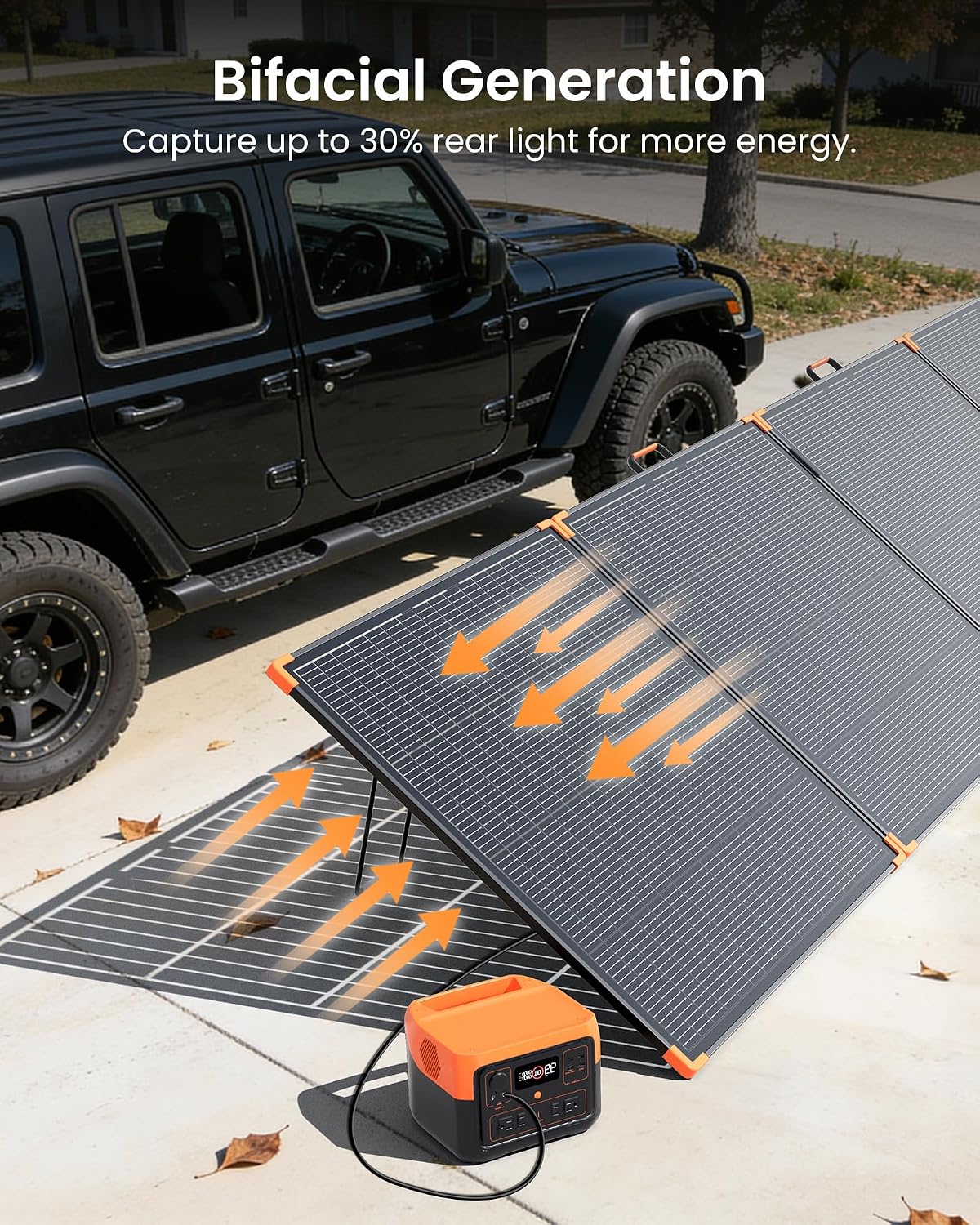
The 30% bifacial claim is conditional. On light concrete we measured roughly 38W of rear-side contribution, about 9%. On grass, closer to 22W, or 5%. The 30% figure requires snow or sand, neither of which existed in October. ZOUPW’s own documentation admits a 10% boost is the realistic backyard number, so we’ll call this claim accurate but routinely misread.
The IP68 rating held for everything we could safely test: a five-minute hose soak and a two-hour rainstorm, during which output continued uninterrupted. We did not submerge the panel — we weren’t willing to test that against a 36-month warranty, and we’d flag submersion as unverified rather than repeat the claim.
Two things did not hold up. First, the efficiency specification is cell-level, not module-level; we cannot verify 25% without lab equipment, and the panel’s own footprint suggests a lower module number. Second, our ZOUPW 480W review found the 42.5V output rejects more stations than the listing implies — the DC7909 and DC8020 connectors fit newer Jackery units, but an older Explorer 1000 refused the input entirely.
On a heavily overcast October morning — the kind of flat grey that makes people give up on solar — the panel produced between 58W and 92W. That’s poor in absolute terms but roughly 15% better than the glass reference panel under the same sky, which supports the low-light claim in a limited way.
In broken cloud with sun breaking through, output swung between 140W and 310W minute to minute. Bypass diodes kept the dips shallow rather than collapsing them, which is genuinely useful when trees are casting moving shadows.
On a hot September afternoon, with surface temperature climbing well past 120°F, output sagged noticeably against a comparable cold-weather run. Normal silicon behavior, but worth knowing before you blame your cables.
If you want the current pricing on this 480W bifacial panel, it moves with the season.
Across six weeks, output tracked weather and surface temperature, not age. We saw no measurable decline between week one and week six, no connector corrosion, and no intermittent contact in the 4-in-1 cable.
We did not test beyond six weeks, so any long-term degradation claim — from ZOUPW or anyone else — remains unverified here. Patterns were clear, though: this panel prefers cold, clear, reflective surfaces. Hot afternoons on dark asphalt are its worst case.
That balance is what makes a ZOUPW 480W review worth writing rather than skipping. Most of the feature list does actual work.
| Specification | Value |
|---|---|
| Maximum power | 480W |
| Cell type | N-Type 16BB monocrystalline, non-destructive cutting |
| Stated efficiency | 25%+ (cell-level) |
| Output voltage | 42.5V |
| Amperage | 11.3A |
| Bifacial gain | Up to 30% on high-albedo surfaces; ~10% typical |
| Waterproof rating | IP68 |
| Weight | 22.5 lb |
| Power density | 21.3 W/lb |
| Upper temperature rating | 140°F |
| Cells | 16 |
| Included cables | 2ft 12AWG 4-in-1; 13ft 12AWG extension |
| Warranty | 36 months |
| Model | ZP-DS480W |
If you’re pairing this with a large station, our notes on the Bluetti Elite 200 V2 explain why input voltage limits matter more than panel wattage.
Unfold the array along the hinges, position it facing the sun, angle it against something rigid or stake it down, run the 4-in-1 cable from the junction box to your station, confirm the input is registering on the station’s display. First attempt took about four minutes because we read the manual. Every subsequent setup took 90 seconds.
Nothing here depends on an app, an account, or an internet connection, which is a genuine relief after reviewing products that require all three to function. The one non-obvious dependency: your power station must accept 50V or higher. That isn’t a setup step, it’s a prerequisite, and it’s buried in the listing.
Two days of use and angling became instinctive. The adjustment that took longest was accepting that repositioning the panel twice a day beats leaving it fixed — a 15-degree change at midday recovered 40 to 60 watts in our testing.
Prior solar experience helps but isn’t required. What doesn’t matter at all: knowing anything about voltage architecture. The included cables make the connection foolproof, provided your station can take the input.
For anyone weighing this against a smaller setup, our ZOUPW 480W solar panel review pros cons breakdown lands the same way: the portability is the product.
| Product | Price | Best At | Main Trade-off |
|---|---|---|---|
| ZOUPW 480W Bifacial | $599.99 | Output per pound; one-person deployment | 42.5V output excludes mid-size stations |
| EcoFlow 400W Portable Panel | ~$649 street | Ecosystem integration with EcoFlow stations | Roughly 10 lbs heavier; lower output |
| Bluetti PV350 | ~$799 street | Build rigidity; long-term durability record | 130W less output for more money and more weight |
| Jackery SolarSaga 200W | ~$479 street | Light weight; simple pairing with Jackery units | Less than half the output; needs two panels to compete |
Against the EcoFlow 400W, the ZOUPW wins on raw output and weight and loses on ecosystem polish. If you own an EcoFlow station and want one cable, one app, and one brand to blame, the EcoFlow panel is the lower-friction choice. Note that the ZOUPW 480W solar panel review verdict here isn’t that one is better outright — it’s that the ZOUPW asks more of you and returns more watts.
The Bluetti PV350 is the better-built panel, full stop. Its glass-forward construction feels like equipment rather than luggage, and Bluetti has a longer track record at this price point. It’s also heavier, more expensive, and produces 130 fewer watts. Buy the PV350 if you plan to own it for a decade and move it twice a season.
The Jackery SolarSaga 200W isn’t really competing on output — it’s competing on simplicity. At roughly $479 it pairs instantly with Jackery’s larger stations and weighs less than half as much. Buy two and you’re near ZOUPW’s output for similar money with twice the setup time.
Power density. At 21.3 W/lb, this panel does something the others don’t: it delivers 480W-class output at a weight one person can carry up a ladder. That single number, not the bifacial claim, is what separates it from the field.
If a lightweight, high-output array matters less than ecosystem fit, see our Jackery HomePower 3600 Plus review for the matching station side of that equation.
The panel lists at $599.99. At nominal 480W that’s $1.25 per watt; measured against our best real-world output of 419W, it’s $1.43 per delivered watt. Both numbers are competitive at the top of the portable category, where 200W folding panels routinely run $2.00–$2.50 per nominal watt.
Where the value is strongest: anyone with a 2,000Wh+ station who repositions panels daily and values weight. You’re buying watts per pound, and nothing else at this price comes close. Where it’s weakest: anyone with a 1,000Wh station or a smaller Jackery. You’d be paying for headroom your device cannot accept.
Budget beyond the sticker price. A second 13ft extension cable if you’re roof-mounting, a replacement set of stakes if you camp on hard ground, and potentially a longer run of 12AWG if your station sits far from the array. None of that is expensive, but it’s real.
Price and availability change frequently. Always verify before buying.
ZOUPW backs the panel with a 36-month warranty and advertises 7×24 customer service. That’s mid-tier for the category — Bluetti and EcoFlow offer longer coverage on comparable products. The practical return path is Amazon’s standard 30-day window, which is the easiest route if something arrives damaged.
We found no pattern of service complaints in the 47 current ratings, but 47 reviews is a thin sample. Any ZOUPW 480W solar panel review and rating drawn from that base should say so.
This is a well-executed panel with one significant access restriction. It delivered 87% of nominal output in good conditions, survived rain and repeated folding without visible wear, and beat a comparable glass panel on a per-pound basis by a wide margin. It also refuses to work with a large share of the power stations people actually own, and the listing underplays that. If your station accepts 50V or more and you move your panel rather than bolt it down, the ZOUPW 480W review verdict is straightforward: buy it. If either of those conditions fails, don’t. Tell us your setup in the comments — we read them. And if you’re ready, check the ZOUPW 480W solar panel here.
Yes, conditionally. For anyone with a 50V+ input station who needs maximum watts per pound, it remains one of the few genuinely portable 480W options at $599.99. For anyone with a smaller station, it’s an expensive mistake. The determining factor is your existing equipment, not the panel’s quality.
We tested for six weeks and saw no measurable output decline, no hinge wear, and no connector corrosion. ZOUPW warrants it for 36 months. Beyond that, the composite coating and potted junction box suggest reasonable longevity, but nobody — including us — has published multi-year degradation data on this specific model.
Compatibility. The 42.5V output exceeds the input ceiling on many mid-size power stations, and several buyers report discovering this after purchase. It’s not a defect, but ZOUPW could state the requirement far more prominently than it does in the current listing.
Not really. A first-time buyer with a 500Wh station will find this panel unusable and overpriced for their needs. Beginners are better served by a 100W–200W folding panel that matches their station’s input rating. This is a second or third purchase, not a first one.
Nothing is strictly required — the box includes the 4-in-1 cable, a 13ft extension, a storage bag, and stakes. Optional but useful: a second 12AWG extension for roof-mounted runs, a longer cable if your station sits far away, and the panel itself paired with a station rated 50V or higher.
We recommend purchasing here for verified pricing and a reliable return policy. Amazon’s 30-day window is the simplest recourse if the panel arrives damaged, and the 4.7-star, 47-rating feedback pool gives you at least some independent signal.
Well. We ran a two-hour rainstorm test and a five-minute direct hose soak with no output interruption and no moisture in the junction box. The IP68 rating is legitimate for rain and splash. We did not submerge it, and we’d treat submersion claims as unverified rather than repeat them.
ZOUPW advises against it, and we agree. The composite body, folding hinges, and composite coating are optimized for portability, not permanent UV and wind exposure. The bypass diodes handle temporary shading, not years of it. If you need a fixed array, buy a rigid glass panel designed for the job.
Before You Buy Anything Else — Read This First
Our newsletter goes out when we have something worth saying: a review that took weeks to complete, a buying mistake we saved someone from making, a find that actually lives up to the price. No filler. No weekly spam.